1-Octen-3-Ol
| Molecular & Flavor Profile | |
|---|---|
| Common name: | 1-Octen-3-Ol |
| IUPAC name: | oct-1-en-3-ol |
| SMILES: | CCCCCC(C=C)O |
| CAS: | 3391-86-4 |
| Flavor Profile: | raw, fishy, oily, earthy, fungal, chicken, mushroom, green |
| FEMA Flavor Profile: | Cucumber , Earth , Fat , Floral , Mushroom |
| FEMA Number: | 2805 |
| Taste: | Not Available |
| Odor: | Not Available |
| Functional Groups: | hydroxy compound, alcohol, secondary alcohol, alkene |
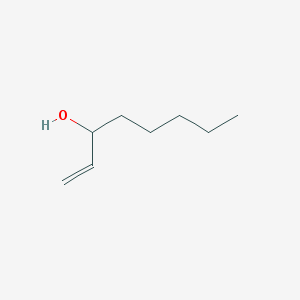
Entities that contain 1-Octen-3-Ol
- Egg
- Wholewheat Bread
- Wort
- Beer
- Cognac Brandy
- Rum
- Wine
- Bilberry Wine
- Botrytized Wine
- Champagne
- Plum Wine
- Port Wine
- Red Wine
- Rose Wine
- Sherry
- Sparkling Wine
- Strawberry Wine
- White Wine
- Coffee
- Mate
- Malt
- Oats
- Rice
- Corn
- Sweetcorn
- Buttermilk
- Cheese
- Blue Cheese
- Camembert Cheese
- Cheddar Cheese
- Comte Cheese
- Cottage Cheese
- Cream Cheese
- Domiati Cheese
- Emmental Cheese
- Feta Cheese
- Goat Cheese
- Gruyere Cheese
- Limburger Cheese
- Mozzarella Cheese
- Munster Cheese
- Other Cheeses
- Parmesan Cheese
- Provolone Cheese
- Romano Cheese
- Roquefort Cheese
- Russian Cheese
- Sheep Cheese
- Swiss Cheese
- Tilsit Cheese
- Hops Oil
- Hyssop Oil
- Mentha Oil
- Clam
- Crab
- Kelp
- Krill
- Oyster
- Scallop
- Shrimp
- Fish
- Lavendar
- Banana
- Currant
- Black Currant
- Red Currant
- White Currant
- Fig
- Grape
- Guava
- Litchi
- Melon
- Mountain Papaya
- Pineapple
- Plum
- Pumpkin
- Raisin
- Starfruit
- Berry
- Cloudberry
- Kumquat
- Vanilla
- Mushroom
- Truffle
- Basil
- Buckwheat
- Calamus
- Dill
- Lemon Balm
- Liqourice
- Mint
- Rosemary
- Sage
- Spearmint
- Thyme
- Meat
- Cocoa
- Beans
- Lima Beans
- Kidney Beans
- Soybean
- Pecans
- Sesame
- Olive
- Pine
- Tea
- Anise Hyssop
- Marjoram
- Oregano
- Green Beans
- Endive
- Tomato
- Asparagus
- Potato
- Poppy Seed
- Spinach
- Cluster Bean
- Basmati Rice
- Ricotta Cheese
- Rocket salad
- Winter savory
- Shiitake
Physicochemical Properties
- Molecular weight: 128.215 g/mol
- HBD count: 1
- HBA count: 1
- Number of rotatable bonds: 5
- Complexity: 69.0
- Topological Polor Surface Area: 20.2 A^2
- Monoisotopic Mass: 128.12 g/mol
- Exact Mass: 128.12 g/mol
- XlogP: 2.6
- Charge: 0 C(coulomb)
- Heavy Atom Count: 9
- Atom Stereocenter Count: 1
- Defined Atom Stereocenter Count: 0
- Undefined Atom Stereocenter Count: 1
- Bond Stereocenter Count: 0
- Defined Bond Stereocenter Count: 0
- Undefined Bond Stereocenter Count: 0
- Isotope Atom Count: 0
- Covalently Bonded Unit Count: 1
- InChI: InChI=1S/C8H16O/c1-3-5-6-7-8(9)4-2/h4,8-9H,2-3,5-7H2,1H3
- Volume 3D: 117.2
Nomenclature
- Common name: 1-Octen-3-Ol
- IUPAC name: oct-1-en-3-ol
- CAS numbers: 3391-86-4
- SMILES: CCCCCC(C=C)O
- InChI: InChI=1S/C8H16O/c1-3-5-6-7-8(9)4-2/h4,8-9H,2-3,5-7H2,1H3
- FlavorDB/FEMA name: 1-OCTEN-3-OL
- Synonyms: Amyl vinyl carbinol; Matsutake alcohol; 3-Octenol; n-Pentyl vinyl carbinol; Amylvinylcarbinol; 3-Hydroxy-1-octene; Oct-1-en-3-ol; 1-Octen-3-ol; Oct-1-ene-3-ol; Vinyl amyl carbinol
- FL number: 2.023
- NAS number: 2805
- CoE number: 72
- EINECS number: 222-226-0
- JECFA number: 1152
Description
- Flavor profile: raw, fishy, oily, earthy, fungal, chicken, mushroom, green
- FooDB flavor profile: raw, fishy, oily, earthy, fungal, chicken, mushroom, green
- FEMA flavor profile: Cucumber, Earth, Fat, Floral, Mushroom
- Functional groups: hydroxy compound, alcohol, secondary alcohol, alkene
- Bitter compound: No
- Source description: 1-Octen-3-ol has a powerful, sweet, earthy odor with a strong, herbaceous note reminiscent of lavender–lavandin, rose and hay. It has a sweet, herbaceous taste
Regulatory Status
- CoE status: 10 ppm
- FDA status: 21 CFR 172.515
- JECFA status: Acceptable. No safety concern at current levels of intake when used as a flavoring agent (2002)
Aroma/Taste Threshold Values
- Aroma threshold values: 25 ppb
- Taste threshold values: Taste characteristics at 10 ppm; mushroom, earthy, fungal, green, oily, vegetative, umami sensation and savory-brothy
Natural Occurence
- Occurrence summary: Naturally occurring; Reported in 122 FlavorDB source entities
- Source entity count: 122
- Representative sources: Egg, Wholewheat Bread, Wort, Beer, Cognac Brandy, Rum, Wine, Bilberry Wine, Botrytized Wine, Champagne
- Documented natural occurrence: Originally reported found in the mushroom Armillaria matsutake, a parasite growing on the radical hairs of Pinus densiflora in the forests of Japan; it has been isolated also in the essential oils of Mentha pulegium L , lavender and Mentha tim-jia. Also reported found in over 160 foods and beverages including banana, kumquat peel oil, berries, currants, guava, grapes, raisin, melon, pineapple, asparagus, potato, tomato, Mentha oils, thyme, wheat bread, cheeses, buttermilk, boiled egg, fish, cooked meats, hop oil, beer, cognac, rum, grape wines, cocoa, coffee, tea, pecans, plum, oats, soybean, olive, cloudberry, plums, beans, mushroom,marjoram, starfruit, sesame seed, fig, kelp, rice, beans, litchi, calamus, dill, licorice, pumpkin, buckwheat, sweet corn, corn tortilla, malt, rice, wort, krill, rosemary, Bourbon vanilla, mountain papaya, endive, lemon balm, shrimp, oyster, crab, clam, scallop, truffle, winter savory, anise hyssop and maté
Composition
- Molecular formula: C8H16O
- Molecular composition: C: 0.749, H: 0.126, O: 0.125
- Number of atoms: 9
ADMET Properties
- ADMET Solubility: -1.663
- ADMET Solubility Level: 4.0
- ADMET BBB: 0.298
- ADMET BBB Level: 1.0
- ADMET EXT Hepatotoxic: -6.11912
- ADMET EXT Hepatotoxic prediction md: False
- ADMET EXT Hepatotoxic applicability: All properties and OPS components are within expected ranges.
- ADMET EXT Hepatotoxic applicability md: 8.600530000000001
- ADMET EXT Hepatotoxic applicability mdpvalue: 0.65788
- ADMET Absorption Level: 0.0
- ADMET EXT PPB: 0.5448569999999999
- ADMET EXT PPB prediction: True
- ADMET EXT PPB applicability: OPS PC36 out of range. Value: 3.7831. Training min, max, SD, explained variance: -2.9616, 3.7339, 0.958, 0.0076.
- ADMET EXT PPB applicability md: 10.6496
- ADMET EXT PPB applicability mdpvalue: 0.666197
- ADMET unknown AlogP98: 0.0
- ADMET AlogP98: 2.528
- ADMET PSA 2D: 20.815
2D/3D Properties
- Number of atoms: 9
- Molecular formula: C8H16O
- Molecular composition: C: 0.749, H: 0.126, O: 0.125
- Molecular mass: 128.12 g/mol
- Energy: 1.81 Kcal/M
- AlogP: 2.528
- LogD: 2.528
- Molecular Solubilty: -2.2159999999999997
- Number of aromatic bonds: 0
- Number of aromatic rings: 0
- Number of H acceptor: 1
- Number of H acceptor lipinski: 1
- Number of H donor: 1
- Number of H donor lipinski: 1
- Number of H bonds: 0
- Number of rings: 0
- Surface area(SA): 170.24 A^2
- Molecular SASA(Solvent accessible SA): 334.50199999999995 A^2
- Radius of gyration: 1.40816 A
- Molecular 3D SASA: 302.911 A^2
Consumption
- Consumption: 550.00 lb
- Individual intake: 0.0004661 mg/kg/day
- Trade association guidelines: 2.021 mg
- IOFI: Nature Identical
Specifications
- Specifications: (JECFA, 2008); Appearance; Colorless, oily liquid; Refractive index; 1.431–1.442 (20°C); Assay (min); 92% C8H16O; Solubility; Insoluble in water; soluble in oils; ; miscible in ethanol at room ; temperature; Boiling point; 175–175.2°C; Specific gravity; 0.831–0.839 (25°C)
Reported Uses
- Reported uses (ppm): (FEMA, 1994)
-
Food category usual/max:
Food category Usual (ppm) Max (ppm) Alcoholic beverages 0.30 1.00 Meat products 3.74 5.72 Baked goods 3.81 10.50 Nonalcoholic beverages 0.56 1.22 Chewing gum 0.02 0.02 Processed vegetables 11.85 18.38 Condiments, relishes 2.00 5.00 Snack foods 0.35 0.70 Frozen dairy 0.63 1.33 Soft candy 1.14 1.83 Gelatins, puddings 0.56 1.80 Soups 2.00 4.00 Gravies 1.70 3.00
Synthesis
- Synthesis: From magnesium amyl bromide and acrolein
Physical-Chemical Characteristics
- Empirical formula / MW: C8H16O/128.21
Details of "Molecular & Flavor Profile" and physicochemical properties were obtained from PubChem Substance & Compound Databases, FooDB, Flavornet, SuperSweet, and BitterDB. 2D/3D and ADMET properties were obtained with Discovery Studio.