palmitic acid
| Molecular & Flavor Profile | |
|---|---|
| Common name: | palmitic acid |
| IUPAC name: | hexadecanoic acid |
| SMILES: | CCCCCCCCCCCCCCCC(=O)O |
| CAS: | 159733-92-3, 57-10-3, 67701-02-4 |
| Flavor Profile: | fatty, slightly waxy |
| FEMA Flavor Profile: | Not Available |
| FEMA Number: | 2832 |
| Taste: | Not Available |
| Odor: | Not Available |
| Functional Groups: | carboxylic acid derivative, carboxylic acid |
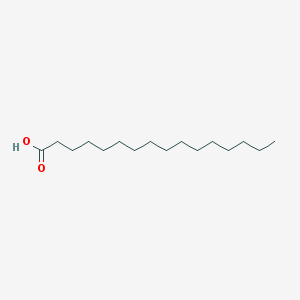
Entities that contain palmitic acid
- Bread
- Beer
- Cognac Brandy
- Rum
- Whisky
- Bourbon Whisky
- Canadian Whisky
- Finnish Whisky
- Japanese Whisky
- Malt Whisky
- Scotch Whisky
- Wine
- Bilberry Wine
- Botrytized Wine
- Champagne
- Plum Wine
- Port Wine
- Red Wine
- Rose Wine
- Sherry
- Sparkling Wine
- Strawberry Wine
- White Wine
- Black Tea
- Popcorn
- Blue Cheese
- Cheddar Cheese
- Other Cheeses
- Roquefort Cheese
- Milk
- Milk Powder
- Hops Oil
- Lemon Peel Oil
- Kelp
- Fatty Fish
- Apple
- Avocado
- Banana
- Coconut
- Fig
- Grape
- Guava
- Mango
- Melon
- Papaya
- Pear
- Bartlett Pear
- Plum
- Starfruit
- Tamarind
- Cloudberry
- Cranberry
- Raspberry
- Strawberry
- Grapefruit
- Mushroom
- Fenugreek
- Beef
- Chicken
- Lamb
- Pork
- Cocoa
- Beans
- Lima Beans
- Kidney Beans
- Soybean
- Peanut Oil
- Cardamom
- Celery
- Cinnamon
- Ginger
- Marjoram
- Saffron
- Green Beans
- Tomato
- Potato
- Bottlegourd
- Colocasia
- Drumstick Leaf
- Lotus
- Kewda
- Water Chestnut
- Garcinia Indica
Physicochemical Properties
- Molecular weight: 256.43 g/mol
- HBD count: 1
- HBA count: 2
- Number of rotatable bonds: 14
- Complexity: 178.0
- Topological Polor Surface Area: 37.3 A^2
- Monoisotopic Mass: 256.24 g/mol
- Exact Mass: 256.24 g/mol
- XlogP: 6.4
- Charge: 0 C(coulomb)
- Heavy Atom Count: 18
- Atom Stereocenter Count: 0
- Defined Atom Stereocenter Count: 0
- Undefined Atom Stereocenter Count: 0
- Bond Stereocenter Count: 0
- Defined Bond Stereocenter Count: 0
- Undefined Bond Stereocenter Count: 0
- Isotope Atom Count: 0
- Covalently Bonded Unit Count: 1
- InChI: InChI=1S/C16H32O2/c1-2-3-4-5-6-7-8-9-10-11-12-13-14-15-16(17)18/h2-15H2,1H3,(H,17,18)
- Volume 3D: 229.5
Nomenclature
- Common name: palmitic acid
- IUPAC name: hexadecanoic acid
- CAS numbers: 159733-92-3, 57-10-3, 67701-02-4
- SMILES: CCCCCCCCCCCCCCCC(=O)O
- InChI: InChI=1S/C16H32O2/c1-2-3-4-5-6-7-8-9-10-11-12-13-14-15-16(17)18/h2-15H2,1H3,(H,17,18)
- FlavorDB/FEMA name: PALMITIC ACID
- Synonyms: Butter acids; Cetylic acid; Coconut. oil. fatty acids; Hexadecanoic acid; n-Hexadecanoic acid; n-Hexadecoic acid; Hexadecylic acid; Palmitate; Palmitic acid; Palmitic acid, pure; Pentadecanecarboxylic acid; 1-Pentadecanecarboxylic acid
- FL number: 8.014
- NAS number: 2832
- CoE number: 14
- EINECS number: 200-312-9
- JECFA number: 115
Description
- Flavor profile: fatty, slightly waxy
- FooDB flavor profile: fatty, slightly waxy
- Functional groups: carboxylic acid derivative, carboxylic acid
- Bitter compound: No
- Source description: Palmitic acid is virtually odorless. It is also reported as having a slight characteristic odor and taste. It is a mixture of solid organic acids obtained from fats consisting chiefly of palmitic acid (C16H35O2) with varying amounts of stearic acid (C16H36O2)
Regulatory Status
- FDA status: 21 CFR 172.836, 172.842, 172.860
- JECFA status: Acceptable. No safety concern at current levels of intake when used as a flavoring agent (1997)
Aroma/Taste Threshold Values
- Aroma threshold values: 10 ppm
Natural Occurence
- Occurrence summary: Naturally occurring; Reported in 83 FlavorDB source entities
- Source entity count: 83
- Representative sources: Bread, Beer, Cognac Brandy, Rum, Whisky, Bourbon Whisky, Canadian Whisky, Finnish Whisky, Japanese Whisky, Malt Whisky
- Documented natural occurrence: Reported found in apple, beef fat, preferments of bread, celery, cheddar cheese, blue cheese, roquefort cheese, other cheeses, roasted cocoa bean, cognac, country cured ham, essential oil of lemon, heated milk, essential oil of sweet orange, pork fat, potato, black tea, tomato, banana, grapefruit juice, cranberry, guava, grapes, melon, papaya, pear, raspberry, strawberry, cinna-mon, ginger, saffron, milk powder, fatty fish, chicken, lamb, hop oil, beer, rum, whiskies, grape wines, peanut oil, popcorn, soybean, coconut meat, avocado, cloudberry, plums, beans, mushroom, starfruit, marjoram, fenugreek, mango, tamarind, fig, kelp, cardamom, rice, prickly pear, dill, licorice, sake, buckwheat, corn oil, malt, wort, roasted chicory root, lemon balm, shrimp, crab, clam, scallop, Chinese quince, pawpaw and sweet grass oil
Composition
- Molecular formula: C16H32O2
- Molecular composition: C: 0.749, H: 0.126, O: 0.125
- Number of atoms: 18
ADMET Properties
- ADMET Solubility: -4.68
- ADMET Solubility Level: 2.0
- ADMET BBB: 1.219
- ADMET BBB Level: 0.0
- ADMET EXT Hepatotoxic: -23.3726
- ADMET EXT Hepatotoxic prediction md: False
- ADMET EXT Hepatotoxic applicability: All properties and OPS components are within expected ranges.
- ADMET EXT Hepatotoxic applicability md: 6.08249
- ADMET EXT Hepatotoxic applicability mdpvalue: 0.99997
- ADMET Absorption Level: 1.0
- ADMET EXT PPB: 2.95007
- ADMET EXT PPB prediction: True
- ADMET EXT PPB applicability: All properties and OPS components are within expected ranges.
- ADMET EXT PPB applicability md: 9.65285
- ADMET EXT PPB applicability mdpvalue: 0.963284
- ADMET unknown AlogP98: 0.0
- ADMET AlogP98: 6.393
- ADMET PSA 2D: 38.116
2D/3D Properties
- Number of atoms: 18
- Molecular formula: C16H32O2
- Molecular composition: C: 0.749, H: 0.126, O: 0.125
- Molecular mass: 256.24 g/mol
- Energy: 5.04 Kcal/M
- AlogP: 6.393
- LogD: 4.944
- Molecular Solubilty: -6.662000000000001
- pKa: 4.72
- Number of aromatic bonds: 0
- Number of aromatic rings: 0
- Number of H acceptor: 2
- Number of H acceptor lipinski: 2
- Number of H donor: 1
- Number of H donor lipinski: 1
- Number of H bonds: 0
- Number of rings: 0
- Surface area(SA): 319.87 A^2
- Molecular SASA(Solvent accessible SA): 550.456 A^2
- Radius of gyration: 2.11844 A
- Molecular 3D SASA: 474.744 A^2
Consumption
- Consumption: 4533.33 lb
- Individual intake: 0.003841 mg/kg/day
- Trade association guidelines: 0.704 mg
- IOFI: Nature Identical
Specifications
- Specifications: (FCC, 1996); Acid value (max); Between 204 and 220; Saponification value; 205–2211, 418–1.421; Appearance; Hard, white, or faintly yellowish, ; somewhat glossy crystalline solid, or ; as a white or yellowish powder; Solubility; Practically insoluble in water; soluble ; in alcohol, ether, chloroform; Heavy metals (as Pb); Not more than 10 mg/kg; Solidification point; Between 53.3 and 62°C; Iodine value; Not more than 2.0; Unsaponifiable ; matter; Not more than 1.5%; Residue on ignition; Not more than 0.1%; Water; Not more than 0.2%
Reported Uses
- Reported uses (ppm): (FEMA, 1994)
-
Food category usual/max:
Food category Usual (ppm) Max (ppm) Baked goods 2.79 2.80 Meat products 4.10 8.90
Synthesis
- Synthesis: Obtained from fats and oils derived from edible sources
Physical-Chemical Characteristics
- Empirical formula / MW: C16H32O2/256.43
Details of "Molecular & Flavor Profile" and physicochemical properties were obtained from PubChem Substance & Compound Databases, FooDB, Flavornet, SuperSweet, and BitterDB. 2D/3D and ADMET properties were obtained with Discovery Studio.