alpha-TERPINEOL
| Molecular & Flavor Profile | |
|---|---|
| Common name: | alpha-TERPINEOL |
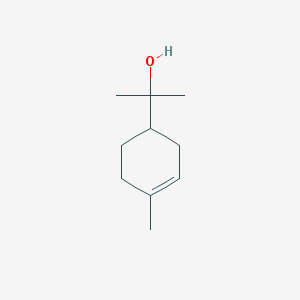
| IUPAC name: | 2-(4-methylcyclohex-3-en-1-yl)propan-2-ol |
| SMILES: | CC1=CCC(CC1)C(C)(C)O |
| CAS: | 8000-41-7, 10482-56-1, 2438-12-2, 98-55-5 |
| Flavor Profile: | Not Available |
| FEMA Flavor Profile: | Anise , Fresh , Mint , Oil |
| FEMA Number: | 3045 |
| Taste: |
lime (distilled) peach, floral (lilac) flavor sweet, lime taste |
| Odor: | floral, lilac |
| Functional Groups: | hydroxy compound, alcohol, tertiary alcohol, alkene |
External IDs
| PubChem ID: | 17100 |
|---|---|
| FooDB ID: | NA |
| SuperSweet ID: | NA |
| BitterDB ID: | NA |
Entities that contain alpha-TERPINEOL
- Wort
- Beer
- Cognac Brandy
- Rum
- Wine
- Bilberry Wine
- Botrytized Wine
- Champagne
- Plum Wine
- Port Wine
- Red Wine
- Rose Wine
- Sherry
- Sparkling Wine
- Strawberry Wine
- White Wine
- Rice
- Corn Oil
- Butter
- Gruyere Cheese
- Parmesan Cheese
- Arar
- Buchu
- Cajeput
- Citrus Peel Oil
- Eucalyptus
- Hops Oil
- Lovage
- Mandarin Orange Peel Oil
- Mentha Oil
- Neroli Oil
- Clary Sage
- Sea Buckthorns
- Lavendar
- Apple
- Apricot
- Avocado
- Black Currant
- Elderberry
- Grape
- Guava
- Litchi
- Loquat
- Mango
- Melon
- Naranjilla
- Orange
- Bitter Orange
- Papaya
- Mountain Papaya
- Passionfruit
- Peach
- Pear
- Bartlett Pear
- Pineapple
- Plum
- Quince
- Raisin
- Starfruit
- Tamarind
- Blueberry
- Cherry
- Sour Cherry
- Cranberry
- Gooseberry
- Raspberry
- Strawberry
- Bergamot
- Citrus Fruits
- Grapefruit
- Lemon
- Lime
- Mandarin Orange
- Tangerine
- Vanilla
- Mushroom
- Calamus
- Coriander
- Dill
- Fennel
- Lemon Balm
- Liqourice
- Rosemary
- Thyme
- Beef
- Beef Processed
- Chicken
- Beans
- Lima Beans
- Kidney Beans
- Peas
- Nuts
- Laurel
- Myrtle
- Pine
- Tea
- Honey
- Anise
- Star Anise
- Cardamom
- Celery
- Cinnamon
- Clove
- Cumin
- Ginger
- Mace
- Marjoram
- Nutmeg
- Oregano
- Parsley
- Pepper
- Turmeric
- Green Beans
- Capsicum
- Tomato
- Carrot
- Parsnip
- Potato
Physicochemical Properties
- Molecular weight: 154.253 g/mol
- HBD count: 1
- HBA count: 1
- Number of rotatable bonds: 1
- Complexity: 168.0
- Topological Polor Surface Area: 20.2 A^2
- Monoisotopic Mass: 154.136 g/mol
- Exact Mass: 154.136 g/mol
- XlogP: 1.8
- Charge: 0 C(coulomb)
- Heavy Atom Count: 11
- Atom Stereocenter Count: 1
- Defined Atom Stereocenter Count: 0
- Undefined Atom Stereocenter Count: 1
- Bond Stereocenter Count: 0
- Defined Bond Stereocenter Count: 0
- Undefined Bond Stereocenter Count: 0
- Isotope Atom Count: 0
- Covalently Bonded Unit Count: 1
- InChI: InChI=1S/C10H18O/c1-8-4-6-9(7-5-8)10(2,3)11/h4,9,11H,5-7H2,1-3H3
- Volume 3D: 132.2
Nomenclature
- Common name: alpha-TERPINEOL
- IUPAC name: 2-(4-methylcyclohex-3-en-1-yl)propan-2-ol
- CAS numbers: 8000-41-7, 10482-56-1, 2438-12-2, 98-55-5
- SMILES: CC1=CCC(CC1)C(C)(C)O
- InChI: InChI=1S/C10H18O/c1-8-4-6-9(7-5-8)10(2,3)11/h4,9,11H,5-7H2,1-3H3
- FlavorDB/FEMA name: alpha,alpha-4-Trimethyl-3-cyclohexene-1-methanol
- FL number: 2.014
- NAS number: 3045
- CoE number: 62
- EINECS number: 202-680-6
- JECFA number: 366
Description
- FEMA flavor profile: Anise, Fresh, Mint, Oil
- Odor: floral, lilac
-
Taste:
lime (distilled)
peach, floral (lilac) flavor
sweet, lime taste - Functional groups: hydroxy compound, alcohol, tertiary alcohol, alkene
- Bitter compound: No
- Source description: α-Terpineol has a characteristic lilac odor with a sweet taste reminiscent of peach on dilution
Regulatory Status
- CoE status: 40 ppm
- FDA status: 21 CFR 172.515; 27 CFR 21 et seq
- FDA notes: Approved as an excipient (CDER, 1996)
- JECFA status: Acceptable. No safety concern at current levels of intake when used as a flavoring agent (1998)
Aroma/Taste Threshold Values
- Aroma threshold values: pine-like, woody and resinous with a slight cooling lemon and lime citrus nuance, and a floral dry out
- Taste threshold values: Taste characteristics at 2 to 25 ppm; woody, terpy, lemon and lemon–lime-like with a slight herbal and floral nuance. Taste characteristics at 10 to 25 ppm:citrus woody with a lemon and lime nuance. It has a slight soapy mouthfeel
Natural Occurence
- Occurrence summary: Naturally occurring; Reported in 118 FlavorDB source entities
- Source entity count: 118
- Representative sources: Wort, Beer, Cognac Brandy, Rum, Wine, Bilberry Wine, Botrytized Wine, Champagne, Plum Wine, Port Wine
- Documented natural occurrence: Reported found in more than 150 derivatives from leaves, herbs and flowers; the d-, l- and dl-isomers are known:the d-form is found in the essential oils from Cupressaceae in general; also in the oils of Elettaria cardamomum, star anise, marjoram, clary sage, neroli and others. The l-form is found in Satureia montana, lavandin, cajeput, lime, lemon, cinnamon leaves and the distillates from Pinaceae (with exception of Pinus silvestris, which contains d-terpineol together with racemic form); like-wise, Nectandra elaiophora (wood) and petitgrain bigarade. The racemic form is found in cajenne linalool, Thymus caespititius, cajeput, Eucalyptus globulus; mixed with the l-form it is found in petitgrain; a nondefined form of terpineol has been reported in the bitter orange. Reported found in over 260 natural sources including apple, apple juice, apricot, sweet and sour cherry, citrus peel oils and juices, orange, lemon, lime, grapefruit, tangerine, mandarin peels oils and juices, bergamot, cranberry, blueberry, black currant, raspberry, strawberry, guava, grapes, raisin, melon, papaya, peach, pear, pineapple, carrot, celery, peas, potato, bell pepper, tomato, anise, cinnamon, clove, cumin seed, ginger, Mentha oils, pepper, mace, parsley, nutmeg, thyme, Gruyere cheese, parmesan cheese, butter, cooked chicken and beef, hop oil, beer, cognac, rum, wines, tea, nuts, honey, avocado, passion fruit, prune, plums, beans, mushroom, sweet and wild marjoram, starfruit, mango, tamarind, parsnip root, cardamom, coriander seed, rice, quince, litchi, cala-mus, dill, licorice, lovage root, juniper berry, corn oil, laurel, sweet and bitter fennel, wort, elderberry, loquat, myrtle berry, rosemary, buchu oil, Bourbon vanilla, mountain papaya, turmeric, clary sage, lemon balm, nectarines, naranjilla fruit, cape gooseberry and sea buckthorn
Composition
- Molecular formula: C10H18O
- Molecular composition: C: 0.779, H: 0.118, O: 0.104
- Number of atoms: 11
ADMET Properties
- ADMET Solubility: -2.384
- ADMET Solubility Level: 3.0
- ADMET BBB: 0.263
- ADMET BBB Level: 1.0
- ADMET EXT Hepatotoxic: -6.29785
- ADMET EXT Hepatotoxic prediction md: False
- ADMET EXT Hepatotoxic applicability: All properties and OPS components are within expected ranges.
- ADMET EXT Hepatotoxic applicability md: 9.986289999999999
- ADMET EXT Hepatotoxic applicability mdpvalue: 0.0927239
- ADMET Absorption Level: 0.0
- ADMET EXT PPB: -0.772684
- ADMET EXT PPB prediction: True
- ADMET EXT PPB applicability: All properties and OPS components are within expected ranges.
- ADMET EXT PPB applicability md: 8.69161
- ADMET EXT PPB applicability mdpvalue: 0.999243
- ADMET unknown AlogP98: 0.0
- ADMET AlogP98: 2.415
- ADMET PSA 2D: 20.815
2D/3D Properties
- Number of atoms: 11
- Molecular formula: C10H18O
- Molecular composition: C: 0.779, H: 0.118, O: 0.104
- Molecular mass: 154.136 g/mol
- Energy: 0.85 Kcal/M
- AlogP: 2.415
- LogD: 2.415
- Molecular Solubilty: -2.3
- Number of aromatic bonds: 0
- Number of aromatic rings: 0
- Number of H acceptor: 1
- Number of H acceptor lipinski: 1
- Number of H donor: 1
- Number of H donor lipinski: 1
- Number of H bonds: 0
- Number of rings: 1
- Surface area(SA): 196.58 A^2
- Molecular SASA(Solvent accessible SA): 341.755 A^2
- Radius of gyration: 1.67125 A
- Molecular 3D SASA: 320.348 A^2
Consumption
- Consumption: 20333.33 lb
- Individual intake: 0.01723 mg/kg/day
- Trade association guidelines: 3.723 mg
- IOFI: Nature Identical
Specifications
- Specifications: (JECFA, 2008); Appearance; Colorless, viscous liquid; Refractive index; 1.482–1.485 (20°C); Assay (min); 96% C10H18O; Solubility; 1 mL in 2 mL 70% alcohol, 4 mL 60% ; alcohol; slightly soluble in glycerol ; and water; Boiling point; 217°C; Specific gravity; 0.930–0.936 (25°C); Optical rotation; –35° to –15°
Reported Uses
- Reported uses (ppm): (FEMA, 1994)
-
Food category usual/max:
Food category Usual (ppm) Max (ppm) Alcoholic beverages .58 2.12 Gravies 3.00 6.00 Baked goods 15.93 19.52 Hard candy 10.67 17.39 Chewing gum 13.53 83.47 Meat products 5.27 10.54 Condiments, relishes 25.91 44.55 Nonalcoholic beverages 3.40 5.41 Frozen dairy 9.23 14.00 Soft candy 13.51 16.50 Gelatins, puddings 8.56 12.64
Synthesis
- Synthesis: Obtained from terpin hydrate by splitting off water; from pentane tricarboxylic acid by cyclization, followed by esterifi-cation to the hydroxy ester, then the unsaturated ester and Grignard to terpineol; also from isoprene and methyl vinyl ketone, using methyl magnesium iodide
Physical-Chemical Characteristics
- Empirical formula / MW: C10H18O/154.25
Details of "Molecular & Flavor Profile" and physicochemical properties were obtained from PubChem Substance & Compound Databases, FooDB, Flavornet, SuperSweet, and BitterDB. 2D/3D and ADMET properties were obtained with Discovery Studio.