Dipentene
| Molecular & Flavor Profile | |
|---|---|
| Common name: | Dipentene |
| IUPAC name: | 1-methyl-4-prop-1-en-2-ylcyclohexene |
| SMILES: | CC1=CCC(CC1)C(=C)C |
| CAS: | 7705-14-8, 9003-73-0, 8008-56-8, 65996-98-7, 8008-57-9, 138-86-3, 8028-38-4, 0008008-57-9 |
| Flavor Profile: | lemon, citrus, orange, herbal, woody, terpene, citric, camphor |
| FEMA Flavor Profile: | Not Available |
| FEMA Number: | 2625 |
| Taste: |
characteristic ... taste, ... becoming more pronounced and less agreeable on aging or exposure to air sweet, citrus taste characteristic orange taste fresh, citrus taste |
| Odor: |
characteristic odor ... becoming more pronounced and less agreeable on aging or exposure to air penetrating odor acquires terebinthinate odor upon oxidation pleasant lemon-like characteristic orange odor characteristic odor of orange peels citrus odor |
| Functional Groups: | alkene |
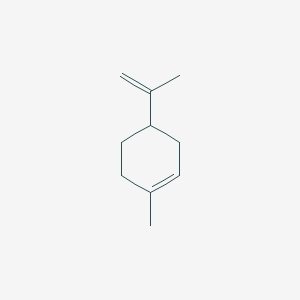
Entities that contain Dipentene
- Oats
- Corn
- Chamomile
- Hyssop Oil
- Lemon Grass
- Lovage
- Apricot
- Cherimoya
- Coconut
- Black Currant
- Elderberry
- Fig
- Grape
- Guava
- Mango
- Orange
- Tamarind
- Bilberry
- Blueberry
- Lemon
- Lime
- Mandarin Orange
- Basil
- Coriander
- Cornmint
- Dill
- Fennel
- Lemon Balm
- Mint
- Rosemary
- Sage
- Spearmint
- Tarragon
- Thyme
- Walnut
- Laurel
- Pine
- Tea
- Anise
- Star Anise
- Cardamom
- Cassia
- Celery
- Cinnamon
- Cumin
- Ginger
- Marjoram
- Nutmeg
- Oregano
- Parsley
- Pepper
- Saffron
- Turmeric
- Peppermint
- Horseradish
- Capsicum
- Carrot
- Parsnip
- Allspice
- Asafoetida
- Bittergourd
- Canola Oil
- Carom Seed
- Colocasia
- Curry Leaf
- Nigella Seed
- Pomegranate
- Poppy Seed
- Turkey Berry
- White Pepper
- Ricotta Cheese
- Cashew nut
- Safflower
- Pummelo
- Rocket salad
- Sunflower
- Summer savory
- Winter savory
- Linden
- Roselle
Physicochemical Properties
- Molecular weight: 136.238 g/mol
- HBD count: 0
- HBA count: 0
- Number of rotatable bonds: 1
- Complexity: 163.0
- Topological Polor Surface Area: 0.0 A^2
- Monoisotopic Mass: 136.125 g/mol
- Exact Mass: 136.125 g/mol
- XlogP: 3.4
- Charge: 0 C(coulomb)
- Heavy Atom Count: 10
- Atom Stereocenter Count: 1
- Defined Atom Stereocenter Count: 0
- Undefined Atom Stereocenter Count: 1
- Bond Stereocenter Count: 0
- Defined Bond Stereocenter Count: 0
- Undefined Bond Stereocenter Count: 0
- Isotope Atom Count: 0
- Covalently Bonded Unit Count: 1
- InChI: InChI=1S/C10H16/c1-8(2)10-6-4-9(3)5-7-10/h4,10H,1,5-7H2,2-3H3
- Volume 3D: 122.9
Nomenclature
- Common name: Dipentene
- IUPAC name: 1-methyl-4-prop-1-en-2-ylcyclohexene
- CAS numbers: 7705-14-8, 9003-73-0, 8008-56-8, 65996-98-7, 8008-57-9, 138-86-3, 8028-38-4, 0008008-57-9
- SMILES: CC1=CCC(CC1)C(=C)C
- InChI: InChI=1S/C10H16/c1-8(2)10-6-4-9(3)5-7-10/h4,10H,1,5-7H2,2-3H3
- FlavorDB/FEMA name: LEMON OIL
- Synonyms: Cedro oil; Citrus limon oil; Lemon oil concentrate; Lemon oil, distilled; Lemon oil, Guinea; Lemon oil, Italian; Lemon petitgrain oil; Lemon petitgrain oil; Lemon tincture; Oil of lemon; Oils, citrus limonia; Oils, lemon
- NAS number: 2625
- CoE number: 139a
Description
- Flavor profile: lemon, citrus, orange, herbal, woody, terpene, citric, camphor
- FooDB flavor profile: lemon, citrus, orange, herbal, woody, terpene, citric, camphor
-
Odor:
characteristic odor ... becoming more pronounced and less agreeable on aging or exposure to air
penetrating odor
acquires terebinthinate odor upon oxidation
pleasant lemon-like
characteristic orange odor
characteristic odor of orange peels
citrus odor -
Taste:
characteristic ... taste, ... becoming more pronounced and less agreeable on aging or exposure to air
sweet, citrus taste
characteristic orange taste
fresh, citrus taste - Functional groups: alkene
- Bitter compound: No
- Source description: The oil is obtained by cold expression (mechanical or manual) of the peel in yields of approximately 4%, based on the weight of the fruit. The oil is obtained from the fresh peel with or without previous separation of the pulp and the peel. It has a charac-teristic odor and taste of the outer part of fresh lemon peel. A less valuable quality of oil is obtained by steam distillation of the peel
Regulatory Status
- CoE status: nonalcoholic beverages 174, alcoholic bev-erages 249, ices 377, candy 562, baked goods 642, gelatin desserts 600, others 3000
- FDA status: 21 CFR 161.190, 182.20, 582.20
- FDA notes: See Lemon
Aroma/Taste Threshold Values
- Taste threshold values: Taste characteristics at 50 ppm; fresh juicey lemon, with a sweet citral aldehydic nuance
Natural Occurence
- Occurrence summary: Naturally occurring; Reported in 80 FlavorDB source entities
- Source entity count: 80
- Representative sources: Oats, Corn, Chamomile, Hyssop Oil, Lemon Grass, Lovage, Apricot, Cherimoya, Coconut, Black Currant
Composition
- Molecular formula: C10H16
- Molecular composition: C: 0.882, H: 0.118
- Number of atoms: 10
ADMET Properties
- ADMET Solubility: -3.844
- ADMET Solubility Level: 3.0
- ADMET BBB: 0.9279999999999999
- ADMET BBB Level: 0.0
- ADMET EXT Hepatotoxic: -9.94406
- ADMET EXT Hepatotoxic prediction md: False
- ADMET EXT Hepatotoxic applicability: All properties and OPS components are within expected ranges.
- ADMET EXT Hepatotoxic applicability md: 9.25896
- ADMET EXT Hepatotoxic applicability mdpvalue: 0.331919
- ADMET Absorption Level: 0.0
- ADMET EXT PPB: 0.594508
- ADMET EXT PPB prediction: True
- ADMET EXT PPB applicability: All properties and OPS components are within expected ranges.
- ADMET EXT PPB applicability md: 9.26091
- ADMET EXT PPB applicability mdpvalue: 0.990481
- ADMET unknown AlogP98: 0.0
- ADMET AlogP98: 3.502
- ADMET PSA 2D: 0.0
2D/3D Properties
- Number of atoms: 10
- Molecular formula: C10H16
- Molecular composition: C: 0.882, H: 0.118
- Molecular mass: 136.125 g/mol
- Energy: 2.38 Kcal/M
- AlogP: 3.502
- LogD: 3.502
- Molecular Solubilty: -2.499
- Number of aromatic bonds: 0
- Number of aromatic rings: 0
- Number of H acceptor: 0
- Number of H acceptor lipinski: 0
- Number of H donor: 0
- Number of H donor lipinski: 0
- Number of H bonds: 0
- Number of rings: 1
- Surface area(SA): 174.06 A^2
- Molecular SASA(Solvent accessible SA): 333.50199999999995 A^2
- Radius of gyration: 1.60178 A
- Molecular 3D SASA: 309.153 A^2
Consumption
- Consumption: 4,322,775.00 lb
- Individual intake: 3.6633 mg/kg/day
- Trade association guidelines: 53.958 mg
- IOFI: Natural
Specifications
- Specifications: (FCC, 1996); Angular rotation; Between +57° and +65.6°; Refractive index; Between 1.473 and 1.476 (20°C); Foreign oils; Passes test; Solubility in alcohol; Passes test; Heavy metals (as Pb); Not more than 0.004%; Specific gravity; Between 0.849 and 0.855 (25°C); Lead; Not more than 10 mg/kg; Ultraviolet ; absorption; California type:; Not less than 0.2; ; Italian type:; Not less than 0.49
Reported Uses
- Reported uses (ppm): (FEMA, 1994)
-
Food category usual/max:
Food category Usual (ppm) Max (ppm) Alcoholic beverages 122.80 173.80 Gravies 41.37 106.80 Baked goods 212.80 412.90 Hard candy 431.40 2017.00 Breakfast cereals 200.00 400.00 Jam, jellies 125.00 125.00 Chewing gum 376.10 1692.00 Meat products 18.68 20.02 Condiments, relishes 151.30 306.50 Nonalcoholic beverages 50.70 108.70 Fats, oils 20.00 20.00 Soft candy 232.00 456.60 Frozen dairy 126.10 254.40 Soups 5.53 7.00 Gelatins, puddings 108.50 265.20
Physical-Chemical Characteristics
- Physical-chemical characteristics: The expressed oil is a mobile, clear liquid that may become turbid on cooling; it is pale-yellow or greenish-yellow. It is miscible with dehydrated alcohol and with glacial acetic acid. It may contain a suitable antioxidant. Physical–chemical characters vary, depending on the source of the fruit — Spain, California, Florida, Israel, Italy
Details of "Molecular & Flavor Profile" and physicochemical properties were obtained from PubChem Substance & Compound Databases, FooDB, Flavornet, SuperSweet, and BitterDB. 2D/3D and ADMET properties were obtained with Discovery Studio.